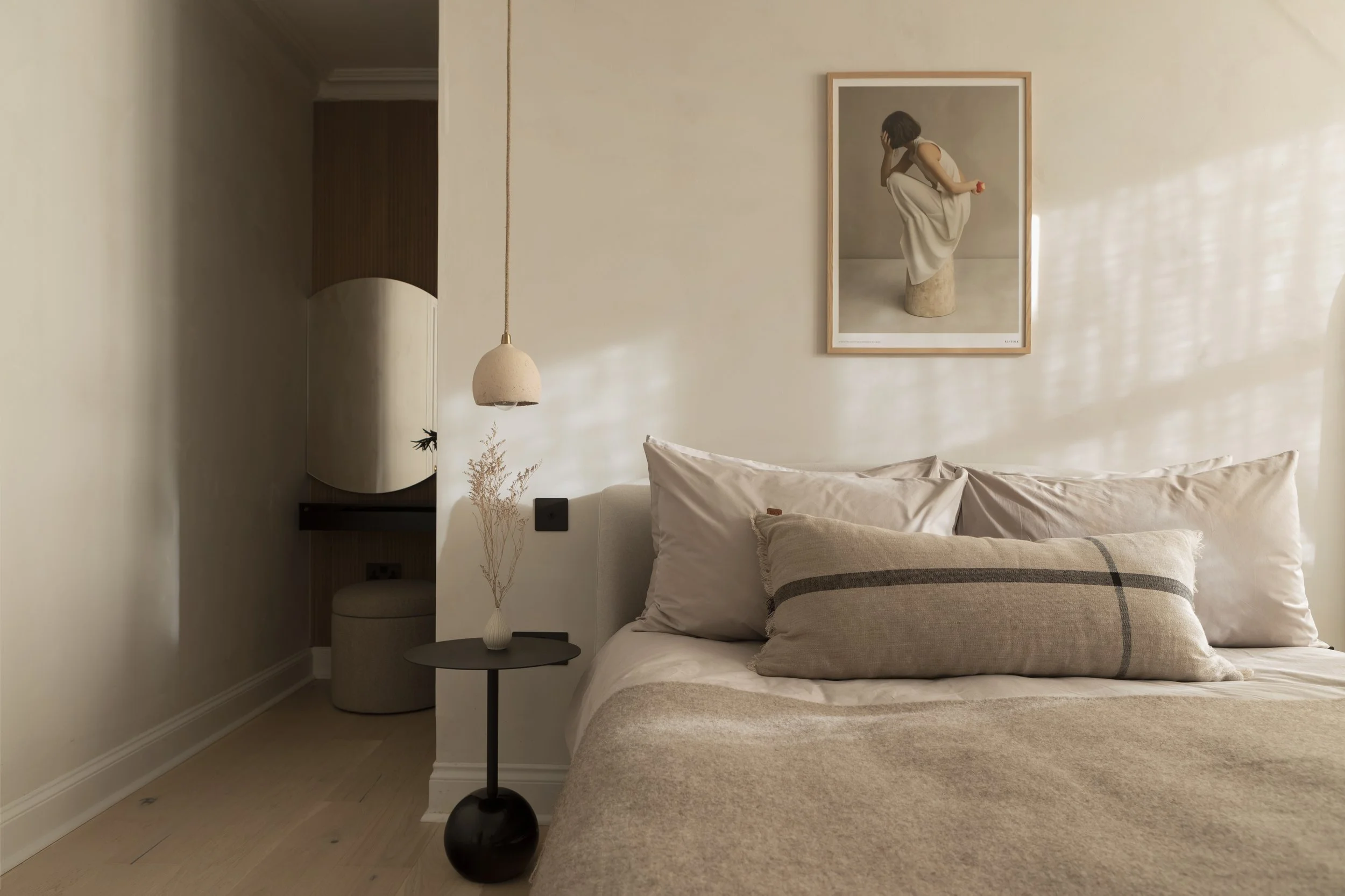
The role of calm in a busy home
Designing spaces that feel restful, considered, and supportive of everyday life
Modern life is busy. Our homes often have to do more than ever — spaces for work, rest, family life, and everything in between.
But when a home feels chaotic, it can quickly become overwhelming. That’s why, at Studio Heim, we place so much importance on creating spaces that feel calm — not empty or minimal, but thoughtful, balanced, and easy to live in.
Calm doesn’t happen by accident. It’s created through a series of considered decisions that shape how a space looks, feels, and functions day to day.
1. Calm begins with clarity
A calm home starts with understanding how you want to live.
When a space is designed around your routines — where things are used, how you move through a room, what you need within reach — everything feels more intuitive.
Clarity in layout removes friction from everyday life, and that’s often the first step towards creating a sense of ease.
2. less, but better
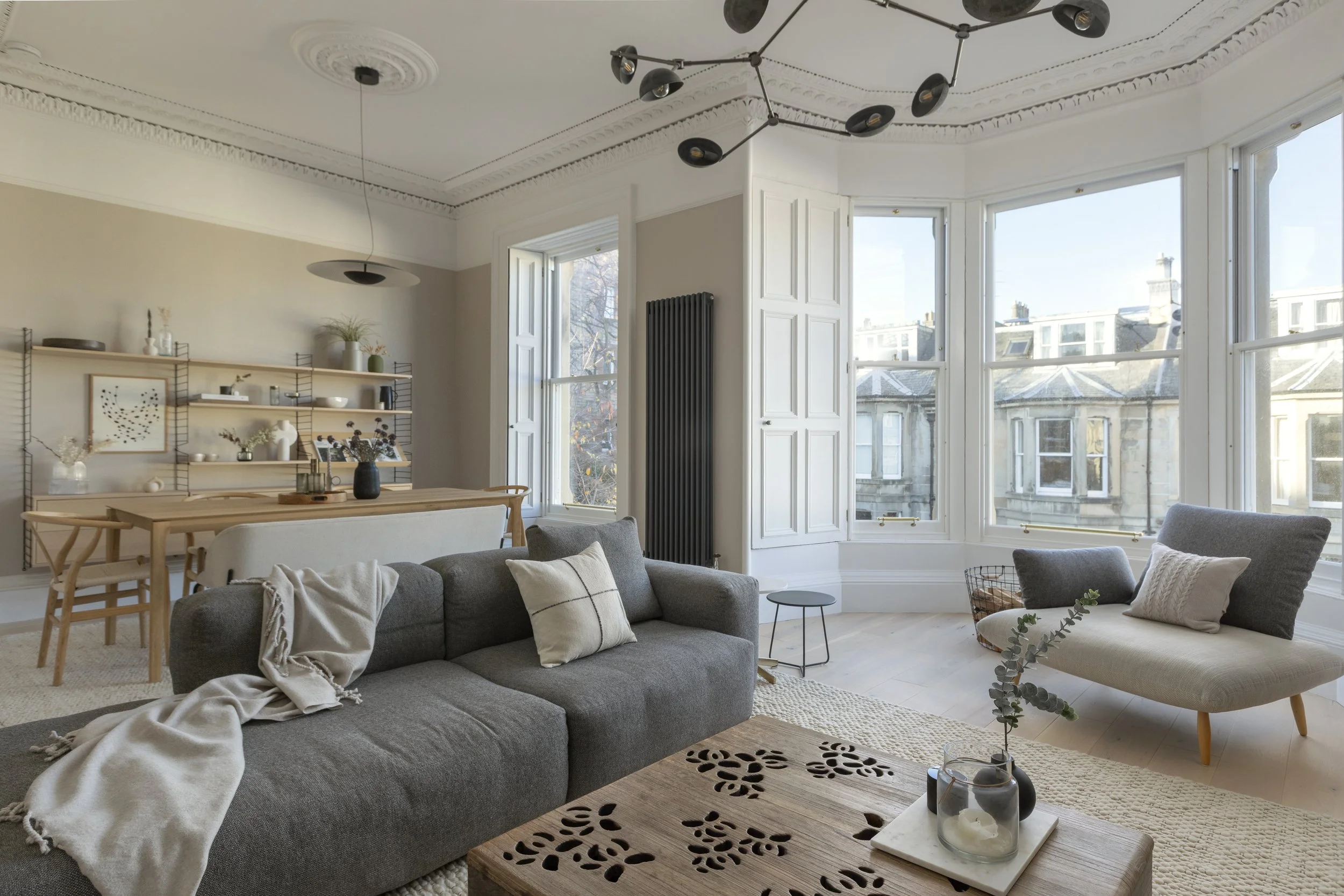
Calm doesn’t mean empty — it means intentional.
Instead of filling a space with more, it’s about choosing fewer, better pieces that truly serve a purpose or bring joy.
This might be a beautifully made sofa, a carefully chosen dining table, or a piece of artwork that anchors the room. When everything has a place and a purpose, the space naturally feels more settled.
“Calm isn’t created by removing everything — it comes from choosing what truly matters.”
3. The power of materials and texture
The way a space feels is just as important as how it looks.
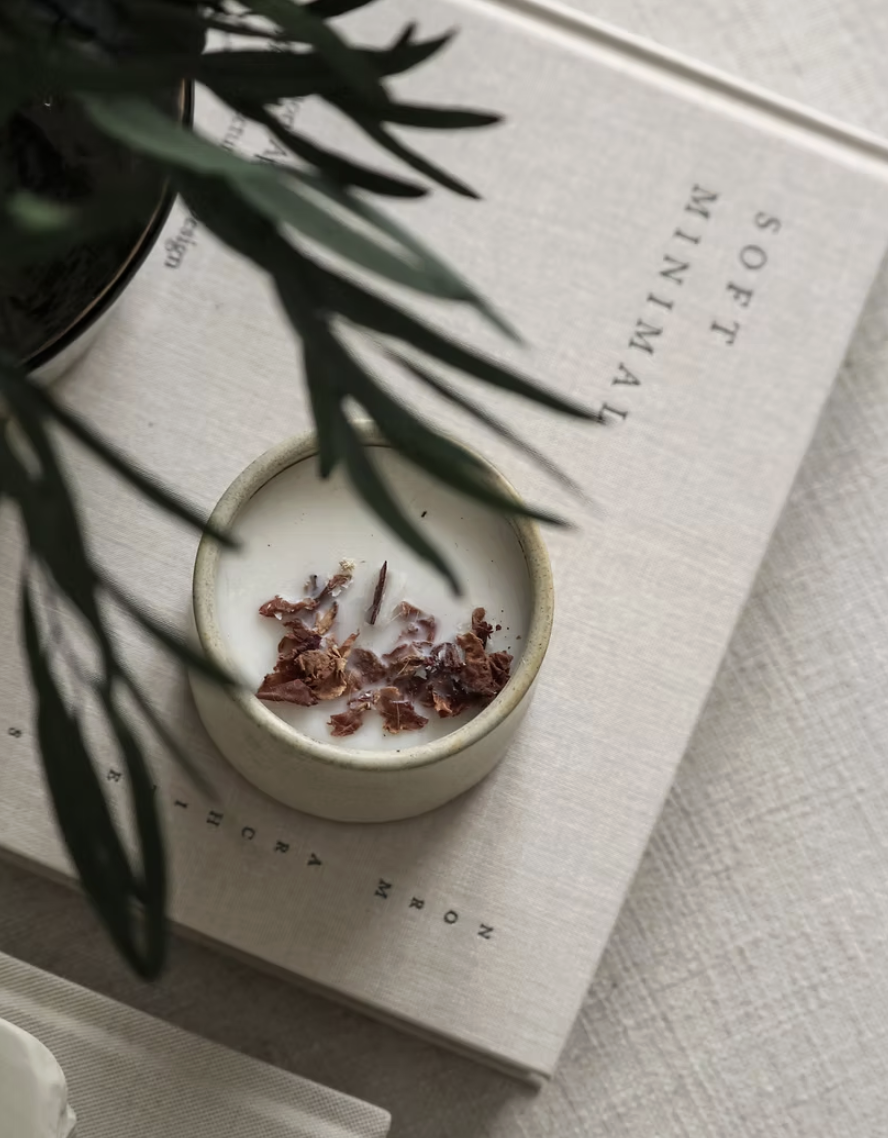
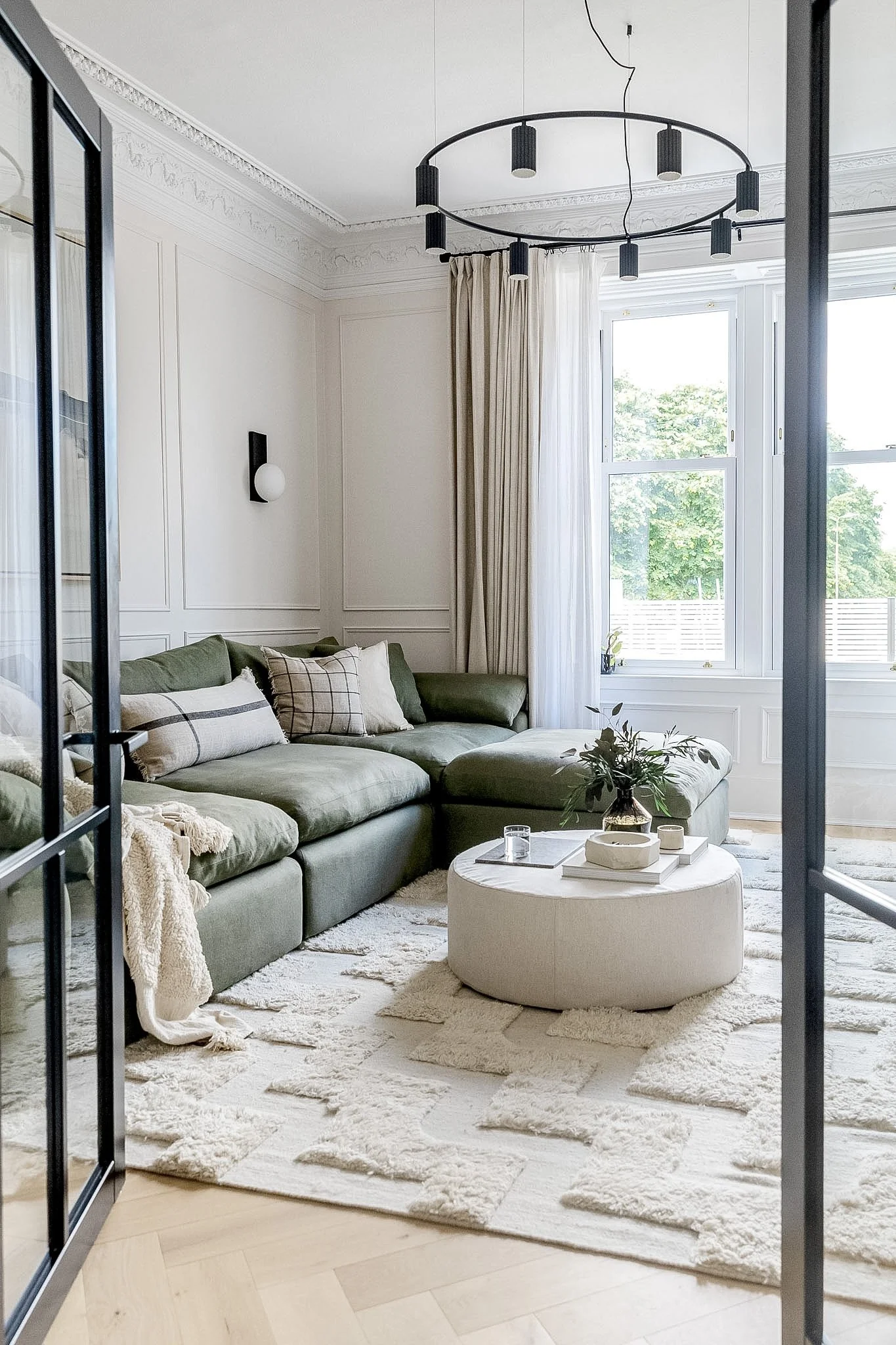
Natural materials, soft textures, and subtle tonal variation all contribute to a sense of calm. Think linen, wood, stone, and warm neutrals — elements that feel grounded and timeless.
Layering these materials adds depth without overwhelming the space, creating an environment that feels both comforting and considered.
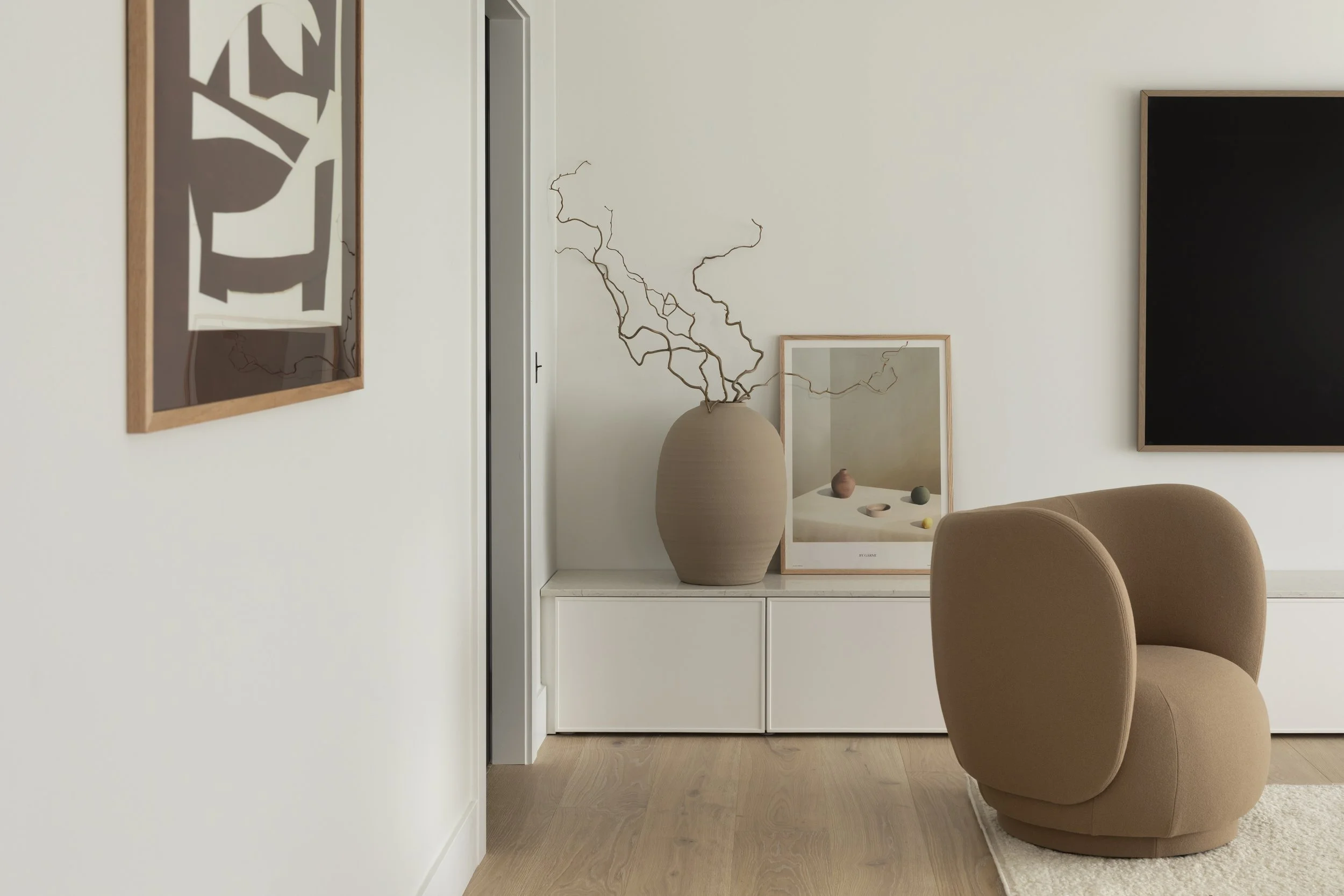
4. Lighting sets the mood
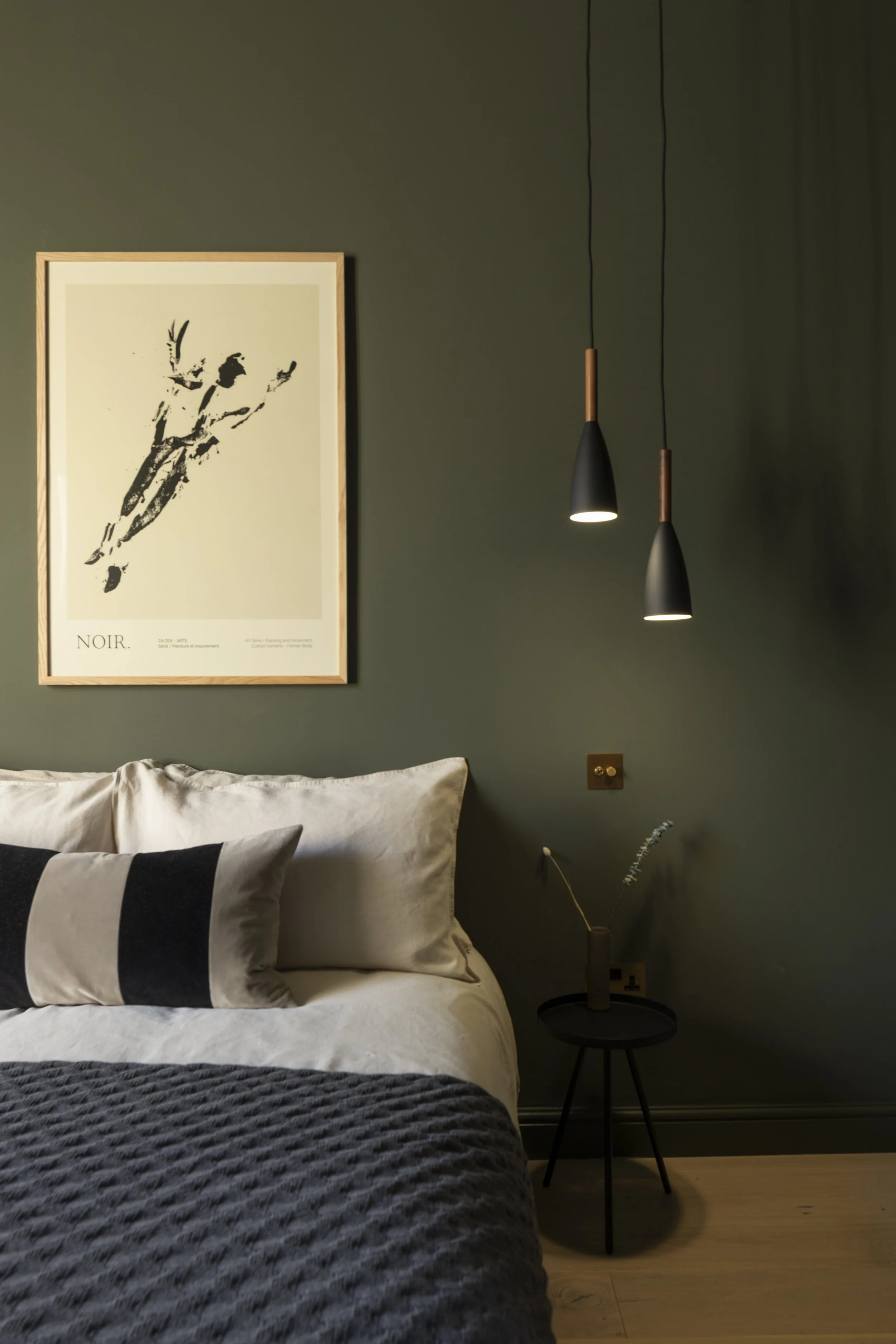
Lighting plays a huge role in how a space feels.
Harsh, overly bright lighting can make a home feel clinical, while softer, layered lighting creates warmth and atmosphere.
A combination of ambient, task, and accent lighting allows a space to adapt throughout the day — from functional mornings to calm, relaxed evenings.
“The way a space is lit can completely change how it feels to live in.”
5. Storage creates visual calm
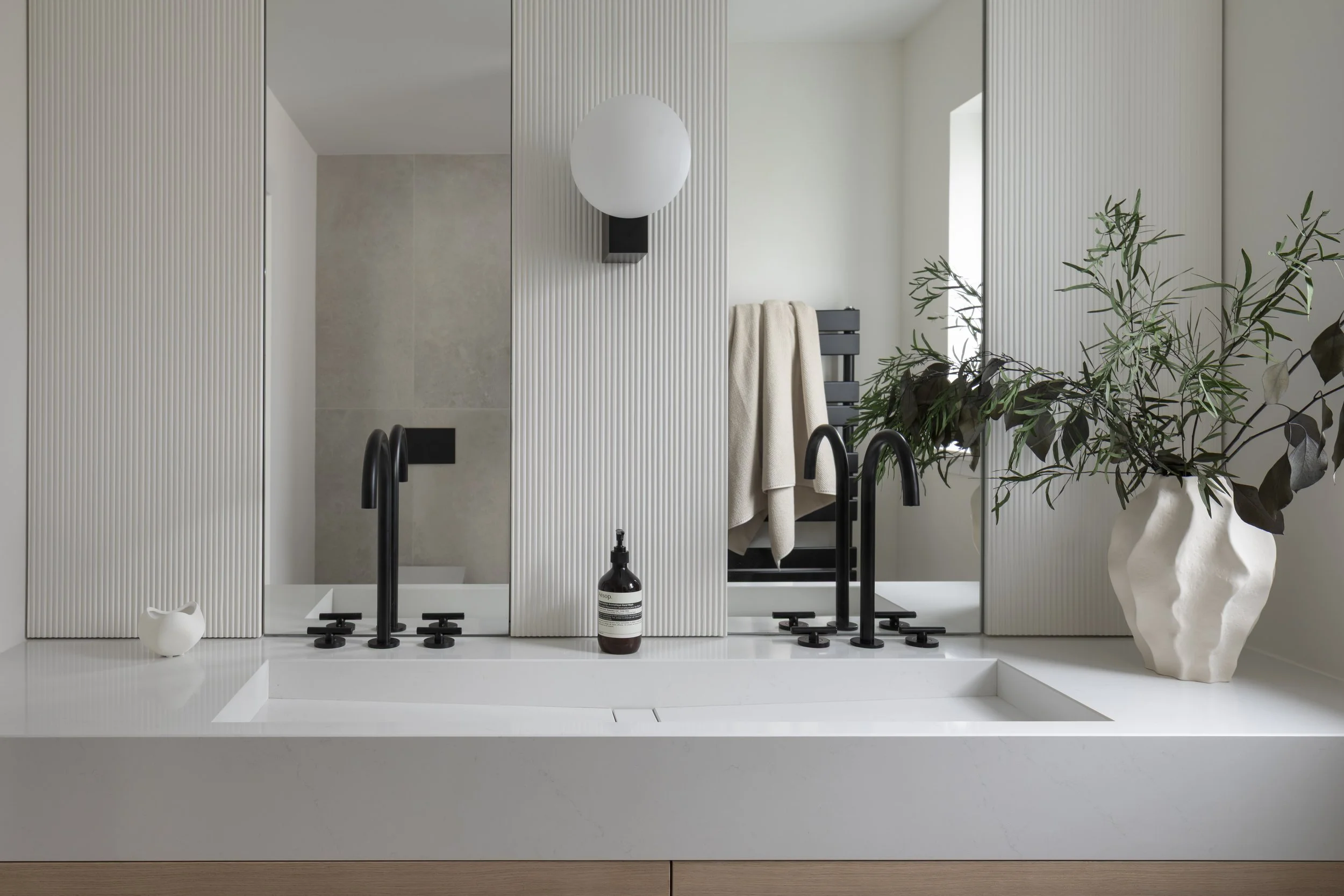
Clutter is one of the quickest ways to disrupt a sense of calm.
Thoughtful storage — integrated cabinetry, hidden compartments, well-planned shelving — allows everyday items to be close at hand without being on display.
When surfaces are clear and everything has a place, the whole room feels lighter and easier to be in.
6. Spaces that support real life
A calm home isn’t about perfection — it’s about creating a space that supports your everyday life.
That might mean durable materials for a busy family, flexible layouts that adapt over time, or simply a quiet corner to pause at the end of the day.
When a home is designed with real life in mind, it naturally feels more balanced, more comfortable, and more calm.
A quieter way of living
At its core, calm design is about creating a home that feels supportive rather than demanding. A space that allows you to slow down, even in the middle of a busy day.
At Studio Heim, this is at the heart of everything we do — designing homes that are not only beautiful, but thoughtfully considered, practical, and deeply connected to the way our clients live.
If you’re looking to create a home that feels calm, considered, and truly supportive of your everyday life, our design services are here to guide you through every step of the process.